The Imagine Podcast · Episode 25
Is It Your Soul or Your Ego Speaking?
The soul doesn't make its case twice. It speaks once, clearly, and then waits. The ego, on the other hand, constructs arguments, rehearses scenarios, and fills the silence with noise. Learning to tell them apart might be the most useful practice you do this year.
Listen now
Most people have heard both voices. One speaks from clarity, even when the answer is uncomfortable. The other speaks from fear, and dresses it as reason. The tricky part? The ego is articulate. Pedro offers a simple way to tell the difference — one you can use in the moment, before the decision has already been made.
Pedro opens with a question he hears often inside the Kundalini Yoga Teacher Training in Lugano and across all Imagine programs: "How do I know if this is my intuition or just what I want to believe?" It's a genuine question, and it gets at something that yoga practice illuminates over time: that we have two distinct inner voices, and they operate very differently. The soul speaks once, quietly, and without urgency. The ego repeats itself, escalates, and brings evidence.
He walks through the four contrasts that help identify which voice is speaking. The soul invites; the ego demands. The soul expands your sense of possibility; the ego contracts around fear or desire. The soul leaves you calmer after hearing it; the ego leaves you more agitated. The soul asks you to trust the unknown; the ego insists it already knows the outcome. These are not abstract spiritual claims — Pedro grounds each one in real situations: a career decision, a relationship ending, a choice about whether to stay or go.
The episode closes with a simple discernment practice Pedro uses with students: place one hand on the heart center, close the eyes, and complete the sentence — "If I already knew the answer, I would know that..." What comes first, before the mind can intervene, is typically the soul's answer. What comes next — the "but" and the reasoning — is typically the ego trying to negotiate. Twelve minutes that stay useful for a long time.
3 Key Takeaways From This Episode
- 01 Soul and ego have different communication styles. The soul speaks quietly, once, without urgency. The ego is repetitive, loud, and builds arguments. Once you recognize the pattern, you start to catch yourself mid-reasoning and ask: "Is this my soul or my ego talking?"
- 02 Four practical contrasts for real decisions. Soul invites, ego demands. Soul expands, ego contracts. Soul calms, ego agitates. Soul trusts the unknown, ego needs to control the outcome. Run a live decision through these four contrasts and something usually clarifies.
- 03 The "if I already knew" practice works quickly. Hand on heart, eyes closed, complete the sentence: "If I already knew the answer, I would know that..." The first thing that comes — before the mind can intervene — tends to be the soul's answer. What follows is usually the ego negotiating.
More from Imagine
Follow along on Instagram for weekly reflections on Kundalini Yoga practice and philosophy.
@imagineyogaacademy.engSubscribe & Review
If this episode was useful, subscribing and leaving a review makes a real difference. It helps more people find the show.
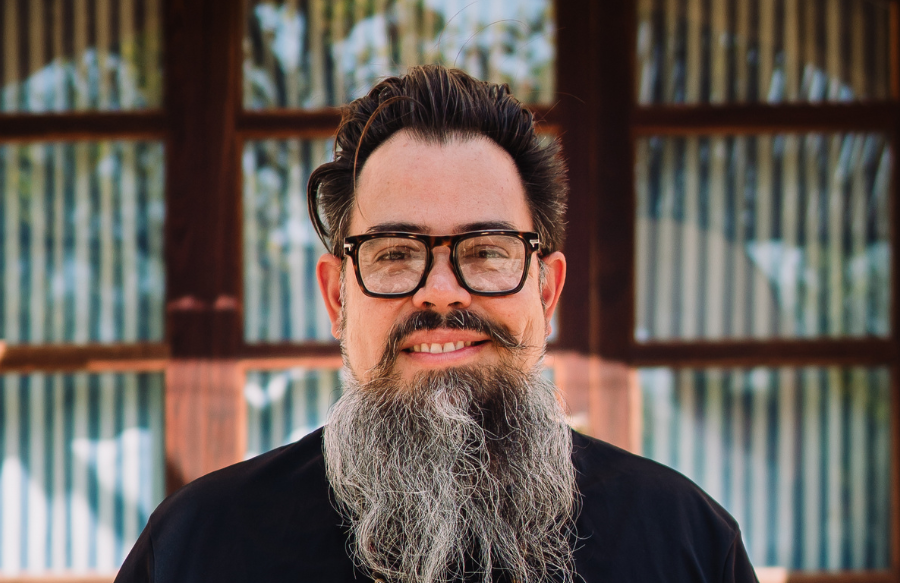
Hi there, I'm Pedro Misle.
I'm the co-founder of Imagine Yoga Academy and a Kundalini Yoga teacher trainer. For more than 14 years I've been teaching people how to work with their own energy — so they can move through life with a little more clarity, and a lot more trust in themselves.
Since 2012, Daniela Troconis and I have trained more than 900 teachers across Switzerland, Spain, India, and online.
The Imagine Podcast is where we bring the real conversations from inside our trainings out into the world. No dogma, no performance — just practical Kundalini Yoga for real life.
More about meQuestions
Frequently Asked Questions
Episode Transcript
Full transcript · Ep. 25 · Is It Your Soul or Your Ego Speaking?
Read transcript
Episode Transcript
Full transcript · Ep. 25 · Is It Your Soul or Your Ego Speaking?
A Question That Keeps Coming Up
Today I want to talk about a question I get asked often — inside the training rooms, in one-to-one conversations, and sometimes in people's own journals, which they share with me at the end of a module. The question is: "How do I know if what I'm hearing is my soul or my ego?"
It's a real question. And I think it's one of the most useful things we can learn to discern — because both voices live inside us, and both can sound very convincing.
How the Soul Speaks
The soul speaks quietly. Usually once. It doesn't repeat itself, and it doesn't escalate. It says what it has to say — and then it waits. There is no urgency in it. The soul is patient because it is not afraid. It already knows. It just needs you to get quiet enough to hear.
Here's what I've noticed: when you hear the soul, you feel something settle. A kind of calm — not the calm of certainty, because the soul often asks you to step into the unknown — but the calm of rightness. As if something has clicked into place, even when the path ahead isn't completely clear.
How the Ego Speaks
The ego is different. The ego repeats itself. It builds a case. It brings evidence, counter-arguments, what-ifs. It rehearses scenarios. It can't stop talking because it's afraid of what happens when it stops talking — because in the silence, you might hear the truth.
The ego also contracts. When the ego is speaking, your world gets smaller. The possibilities narrow. You feel tighter in your chest, more guarded, more defensive. It uses the language of protection: "You can't", "It won't work", "What will people think?" Or sometimes it uses the language of ambition to cover fear: "You deserve more", "Now is not the right time", "Wait until you're ready."
Four Contrasts to Practice With
Here are four contrasts I use with students when they're trying to tell the voices apart:
The soul invites. The ego demands. The soul expands your sense of what's possible. The ego contracts around a specific fear or a specific desire. The soul leaves you calmer. The ego leaves you more agitated — even when it's telling you what you want to hear. The soul asks you to trust. The ego insists it already knows the outcome.
Take any decision you're sitting with right now and run it through these four. You'll usually get a clearer sense of which voice has been louder.
A Simple Practice
I want to leave you with something practical. If you're at a crossroads and you can't tell which voice is speaking, try this: place one hand on your heart center. Close your eyes. Take three slow, conscious breaths — in through the nose, out through the nose. And then complete this sentence in your mind or out loud: "If I already knew the answer, I would know that..."
What comes first — before the mind can intervene, before the reasoning starts — that is usually the soul's answer. What comes next, the "but," the "however," the entire paragraph of justifications — that's the ego, trying to negotiate.
You don't have to follow the soul's answer immediately. But know it. Name it. And notice what happens in your body when you do. Sat Nam.
Imagine Yoga Academy
Something deeper is possible, from exactly where you are.
Nine months. Fifteen people. One way through. The Level I · 200h Kundalini Yoga Teacher Training in Zürich, Geneva, and Lugano begins October 2026.