The Imagine Podcast · Episode 21
There Is a Way Through Every Block
The sutra doesn't say the block will disappear. It says there is a way through. That's a different promise — and a more useful one.
Listen now
We live in an era of real difficulty. Climate instability, political fragmentation, personal uncertainty. The second Sutra of the Aquarian Age doesn't offer comfort. It offers something more demanding: the assumption that a way exists, even before you can see it.
Pedro opens with what the Aquarian Age means — not an astrological belief system, but a practical description of a historical moment defined by acceleration, entanglement, and complexity. The five Sutras are responses to that complexity: not beliefs to adopt but perceptual postures to practice. The second Sutra — "There is a way through every block" — might sound optimistic, but Pedro is careful to draw the distinction. Optimism says it will be fine. The sutra says something more precise: a path exists, and the assumption of that path changes how the nervous system responds to an obstacle.
He draws a parallel with a Stoic insight from Marcus Aurelius, popularized by Ryan Holiday: "What stands in the way becomes the way." The obstacle is not interrupting the journey — it can become the very material of transformation. The Kundalini Yoga Teacher Training in Geneva works with this principle not as philosophy but as practice: students encounter their own blocks in real time — resistance to breath, discomfort in stillness, fear of what emerges — and learn to study those moments rather than avoid them.
The shift Pedro proposes is from "Why is this happening?" to "What is this asking of me?" That pivot doesn't eliminate the difficulty, but it changes the available moves. The mind that assumes there is no path closes. The mind that assumes a path exists remains open and creative. Small questions make this practical: What capacity is this developing? What do I need to understand about this obstacle? What is the next available step?
3 Key Takeaways From This Episode
- 01 The assumption of a way changes what you can see. When we believe there's no path forward, the nervous system contracts and creativity shuts down. Assuming a path exists — even before we see it — keeps us available. That availability isn't naive; it's the precondition for finding what's actually there.
- 02 Obstacles can be material, not just interruptions. Following the Stoic insight Pedro cites, an obstacle doesn't only prevent movement — it can become the substance of transformation. This is the second Sutra in practice: not asking when the block will end, but what the block is revealing about what's needed next.
- 03 You don't need the whole path. You need the next step. Pedro's most practical point: you don't have to see all the way through before moving. The question "what small step is available now?" is enough to keep you in motion. Momentum changes the view.
More from Imagine
Follow along on Instagram for weekly reflections on Kundalini Yoga practice and philosophy.
@imagineyogaacademy.engSubscribe & Review
If this episode resonated with you, taking a moment to subscribe and leave a review makes a real difference. It helps more people find the show.
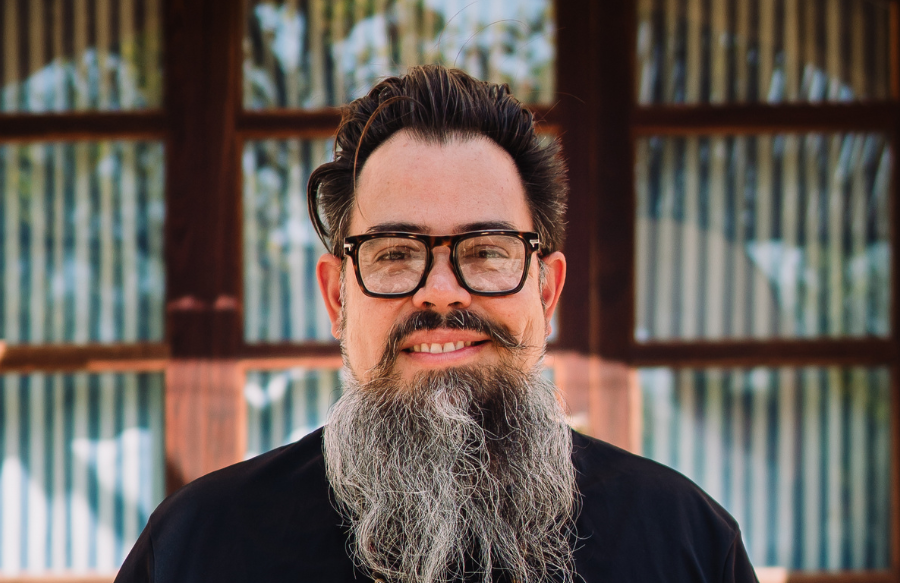
Hi there, I'm Pedro Misle.
I'm the co-founder of Imagine Yoga Academy and a Kundalini Yoga teacher trainer. For the past 14 years, I've helped people reconnect with themselves through practice, philosophy, and honest conversation.
Since 2012, Daniela Troconis and I have trained more than 900 teachers across Switzerland, Spain, India, and online.
The Imagine Podcast opens the kind of conversations we usually have inside our Kundalini Yoga Teacher Trainings — grounded, practical, and real. Just real practice for real life.
More about meQuestions
Frequently Asked Questions
Episode Transcript
Full transcript · Ep. 21 · There Is a Way Through Every Block
Read transcript
Episode Transcript
Full transcript · Ep. 21 · There Is a Way Through Every Block
The Aquarian Age and Why These Sutras Matter
In the previous episode, we explored the first Sutra of the Aquarian Age: Recognize that the other person is you. Today, we continue with the second Sutra. But before we go there, it's important to pause and remember what we mean by the Aquarian Age, and why these Sutras matter at all.
In the tradition of Kundalini Yoga, the Aquarian Age describes a shift in collective consciousness. A time marked by acceleration, interconnection, and complexity. Information moves instantly. Economies are globally entangled. Technology reshapes identity. Individual actions ripple across systems. This kind of era requires a different inner architecture. The Sutras of the Aquarian Age are not beliefs to adopt. They are perceptual trainings. Mental postures. Disciplines of awareness designed to help us navigate uncertainty without collapsing into fear, cynicism, or rigidity.
The Second Sutra
The second Sutra says: There is a way through every block.
This sentence can sound almost comforting. But it is not sentimental. It does not say the block will disappear. It does not say everything will resolve easily. It says something more demanding: there is a way. That statement alone shifts our mental posture. Because when we believe there is no way, the nervous system contracts. The mind closes. Creativity shuts down. But when we assume that a path exists — even if we cannot yet see it — something in us remains available. And that availability changes everything.
What Stands in the Way Becomes the Way
Ryan Holiday, revisiting a Stoic insight from Marcus Aurelius, writes: What stands in the way becomes the way. The obstacle is not merely something that prevents progress. It can become the material of transformation. Instead of asking: Why is this happening? We begin asking: What is this asking of me?
That shift in question is not passive. It requires genuine inquiry. It asks you to look at the block — not to pretend it isn't there, not to force your way through it — but to study it. What is this block showing me? What capacity does this situation demand that I have not yet developed? What would I need to understand, to feel, to accept, for a way through to become visible?
The Questions to Live With
Some questions to sit with: If there truly is a way through, where might it be? What capacity is this situation demanding that I develop? Am I resisting the obstacle, or studying it? What small step is available now?
You do not need the entire path. You need the next movement.
The block may not be there to stop you. It may be there to refine you. Sat Nam.
Imagine Yoga Academy
Something deeper is possible, from exactly where you are.
Nine months. Fifteen people. One way through. The Level I · 200h Kundalini Yoga Teacher Training in Zürich, Geneva, and Lugano begins October 2026.