The Imagine Podcast · Episode 39
Ishvara Pranidhana — The Art of Letting Go Without Giving Up
The ego lives in the head, in the plans and the calculations. Sometimes you just need a place to put it down.
Listen now
Coming soon to Spotify and Apple Podcasts.
Every February, Pedro travels to Amritsar as part of a teaching project at the Golden Temple, not for the professional opportunity but because he needs it. What moves him there, every time, is the devotion of the people around him, fully surrendered, and a phrase that has stayed with him since his first visit: I need a place to rest my head.
Ishvara Pranidhana, the fifth and final Niyama, asks a person to act fully, show up completely, and then release the grip on the outcome. Pedro is honest that this doesn't come easily to him. His Karma number in Tantric Numerology is 8, the Pranic Body, and when it's out of balance he feels a specific, familiar weight: the sense that everything rests on his shoulders alone, and underneath it, a quiet loneliness.
He distinguishes the optimism this Niyama asks for from spiritual bypassing. It isn't \"everything happens for a reason.\" It's a clear-eyed relationship with reality: what already happened has happened, so where does the freed-up attention go now. This shift, from being the sole author of one's life to being its co-author, is a theme woven through the daily practice taught in the Kundalini Yoga Teacher Training in Lugano, where students learn to bring full effort without needing to control every outcome.
The episode closes the full Yamas and Niyamas series Pedro has been building episode by episode. He steps back to name what the ten principles form together: not a checklist for being a good yogi, but a foundation that can hold a practice — beginning with the ordinary, honesty and cleanliness, and ending here, with the willingness to do the work and let it go.
3 Key Takeaways From This Episode
- 01 Surrender is not the same as passivity. Ishvara Pranidhana asks for full effort first, and only then a release of the grip on the result.
- 02 Control promises certainty it can't deliver. The need to manage every outcome eventually costs more energy than it gives back.
- 03 You're the co-author, not the sole author. You bring your full effort and intention, but you're writing your life alongside people and circumstances you didn't choose.
More from Imagine
Follow along on Instagram for weekly reflections on Kundalini Yoga practice and philosophy.
@imagineyogaacademy.engSubscribe & Review
If this episode resonated with you, taking a moment to subscribe and leave a review makes a real difference. It helps more people find the show.
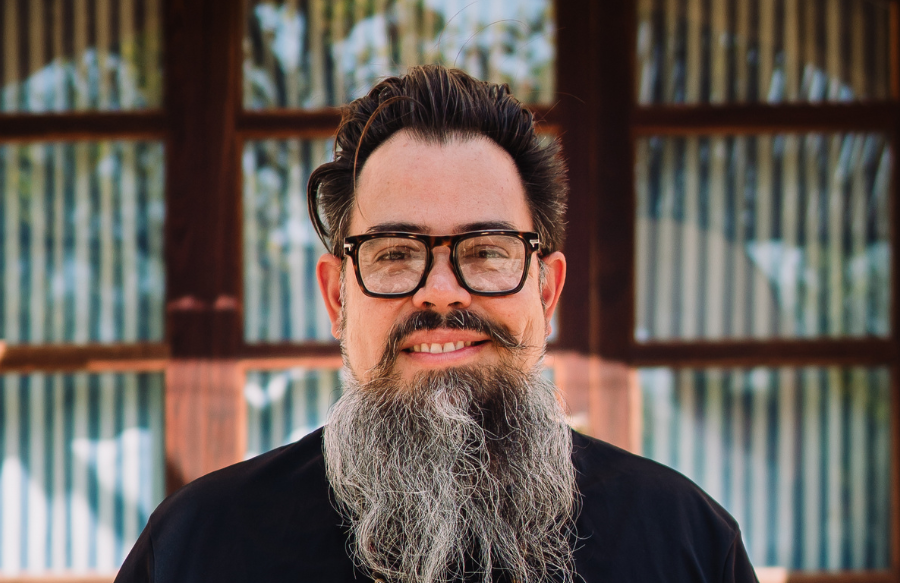
Hi there, I'm Pedro Misle.
I'm the co-founder of Imagine Yoga Academy and a Kundalini Yoga teacher trainer. For the past 14 years, I've helped people reconnect with themselves through practice, philosophy, and honest conversation.
Since 2012, Daniela Troconis and I have trained more than 900 teachers across Switzerland, Spain, India, and online.
The Imagine Podcast opens the kind of conversations we usually have inside our Kundalini Yoga Teacher Trainings — grounded, practical, and real. Just real practice for real life.
More about meQuestions
Frequently Asked Questions
Episode Transcript
Full transcript · Ep. 39 · Ishvara Pranidhana — The Art of Letting Go Without Giving Up
Read transcript
Episode Transcript
Full transcript · Ep. 39 · Ishvara Pranidhana — The Art of Letting Go Without Giving Up
A Place to Rest My Head
Every February, I go to Amritsar. [pause] It's been four years now. I go as part of a team of teachers on a project called Yatra to India, led by my dear friend Judith Ender. And I want to be honest with you about why I keep going back. It's not because of the professional opportunity. It's not even entirely because of Judith, though she's someone I love deeply. I go because I need it. [pause] There's something about that place, the Golden Temple, the Harmandir Sahib, that I cannot explain rationally and I'm not going to try. What I can tell you is what happens to me when I'm there. Every time, without fail, I'm moved in a way I'm not moved anywhere else. Not by the architecture. By the people. The devotion at that place is unlike anything I've encountered in twenty years of practice. People who aren't performing anything. Who aren't documenting it. Who are just there. Fully. Surrendered. And every time I witness that, I think of a phrase that came to me on my first visit and hasn't left me since: I need a place to rest my head. Not my body. My head. Because that's where the ego lives.
Ishvara Pranidhana, Defined
That's what today's episode is about. The fifth and final Niyama: Ishvara Pranidhana. Let me give you the words first. Ishvara, often translated as God, or supreme consciousness, but not in a religious sense. In Patanjali's system, Ishvara simply points to the recognition that there is an intelligence organizing this existence that is not you. Not your ego, not your plans. Pranidhana, to offer toward. To dedicate. To surrender, not as defeat, but as an act of trust. Put together: Ishvara Pranidhana is the practice of offering what you do to something larger than your outcome. You act fully. You show up completely. And then you release your grip on the result.
The Pranic Body and a Familiar Weight
Now let me tell you what it feels like when you haven't learned it yet. In Tantric Numerology, there's something called the Karma number. Mine is 8. The Pranic Body. The Pranic Body in Kundalini Yoga is connected to the breath, to life force, to the fundamental trust that life will sustain you. When it's out of balance, when I'm stressed, fearful, overwhelmed, or simply lost, I get this very specific feeling. A weight. The sense that everything is on my shoulders. That if I stop managing, something will collapse. And beneath that, a feeling of deep loneliness. Like I'm the only one carrying this. I'm telling you this not because I've solved it, but because I think it's useful to hear that someone who teaches surrender has had to practice it in the hardest possible way.
What Control Promises and Can't Deliver
Here's what I've come to understand about control. The need for it isn't weakness. It makes complete sense. When you've learned that things go wrong when you're not watching, the instinct is to watch everything. And for a time, that serves you. But there's a point where it turns, where the energy you're spending trying to control outcomes costs more than it gives back. The need for control promises certainty. And that's the trap, because certainty about outcomes you can't actually get. What Ishvara Pranidhana offers is not certainty. It offers something more useful: the ability to act without depending on a specific outcome in order to feel okay.
A Different Kind of Optimism
There's a version of optimism that's basically avoidance. \"Everything happens for a reason.\" That kind of thinking might feel comforting, but it doesn't ask anything of you. The optimism that Ishvara Pranidhana cultivates is different. It says: what has already happened, has already happened. I can't change it. The question now is, what do I do from here? That's not passivity. It's a very clear-eyed relationship with reality. When I'm at the Golden Temple watching someone pray with that quality of complete surrender, they're not passive. They are fully present, fully engaged with what's real. The surrender is what makes them available to the moment they're actually in.
Author or Co-Author
Which brings me to something I think about often: the difference between being the author of your life and being a co-author. The author model is appealing. I decide the arc. I control the narrative. But life keeps not cooperating with that model. The co-author model is different. You're still writing, still responsible, still bringing your full effort. But you're writing with something, with life, with other people. Your job isn't to override all of that. Your job is to meet it. When I go to Amritsar, this is what I feel in my body. That I'm not alone in this. That there's something larger I can offer my work to.
Closing the Series
I want to close today by stepping back, because this is the final episode in our series on the Yamas and the Niyamas, and I think it's worth saying what they are together. They are not a checklist. They are a way of building a life that can hold a practice. The Yamas orient you outward. The Niyamas orient you inward. Together, they form a foundation. Not for perfection. For practice. It doesn't begin with the dramatic. It begins with the ordinary. With honesty. With cleanliness. With contentment. And it ends here, with the willingness to act fully and then release. Start with how you live. End with how you let go. That's the arc, and I think it's a good one. If this series has landed somewhere real for you, share it with someone who might need it. With love, from here. Sat Nam.
Imagine Yoga Academy
Something deeper is possible, from exactly where you are.
Nine months. Fifteen people. One way through. The Level I · 200h Kundalini Yoga Teacher Training in Zürich, Geneva, and Lugano begins October 2026.