The Imagine Podcast · Episode 40
The Yoga Mat as Home: Asana and the Art of Coming Back to Yourself
The posture is not the point. It never was. It's the direction — you find your own way there.
Listen now
Coming soon to Spotify and Apple Podcasts.
Daniela came to yoga after her father died, in a family that never spoke much about spirituality or faith. She thought she was looking for something to believe in. Looking back, she realizes she was looking for somewhere to come home to — and the mat became exactly that.
Turning to Asana, the third of Patanjali's Eight Limbs, Daniela traces the word to the Sanskrit root as, to sit, to be established — pointing not to movement but to arrival. Over twenty years of practicing and teaching, her relationship to the postures shifted completely: she no longer thinks she's learning shapes, but that the shapes have been teaching her about effort, patience, and the balance between strength and relaxation.
She returns to one of the shortest, most cited lines in the Yoga Sutras, Sthira Sukham Asanam — a posture that is steady and comfortable. For years she read it as an instruction for the body. Now she hears it as a much wider question: can I stay steady when life becomes uncertain, can I soften without giving up. This is exactly the inquiry students meet early in the Kundalini Yoga Teacher Training in Geneva, where asana is taught as an energetic invitation rather than a shape to copy.
Daniela describes the mat as both a home and a laboratory: a home because it offers a place with no roles to perform, and a laboratory because it's honest, showing exactly how a person responds to difficulty — whether they push, collapse, or breathe. She also explains why many Kundalini Yoga kriyas are practiced with eyes closed, not to escape the world but to become more present to oneself first.
3 Key Takeaways From This Episode
- 01 Asana means arrival, not movement. The Sanskrit root as means to sit, to be established — the posture is a place you settle into, not a shape you chase.
- 02 Sthira Sukham Asanam applies to life, not just the body. Steady and comfortable at once is a question you can ask of any difficult moment, not only a pose.
- 03 The mat is a laboratory for your patterns. How you respond to a challenging posture, pushing, bracing, breathing, tends to mirror how you respond to everything else.
More from Imagine
Follow along on Instagram for weekly reflections on Kundalini Yoga practice and philosophy.
@imagineyogaacademy.engSubscribe & Review
If this episode resonated with you, taking a moment to subscribe and leave a review makes a real difference. It helps more people find the show.
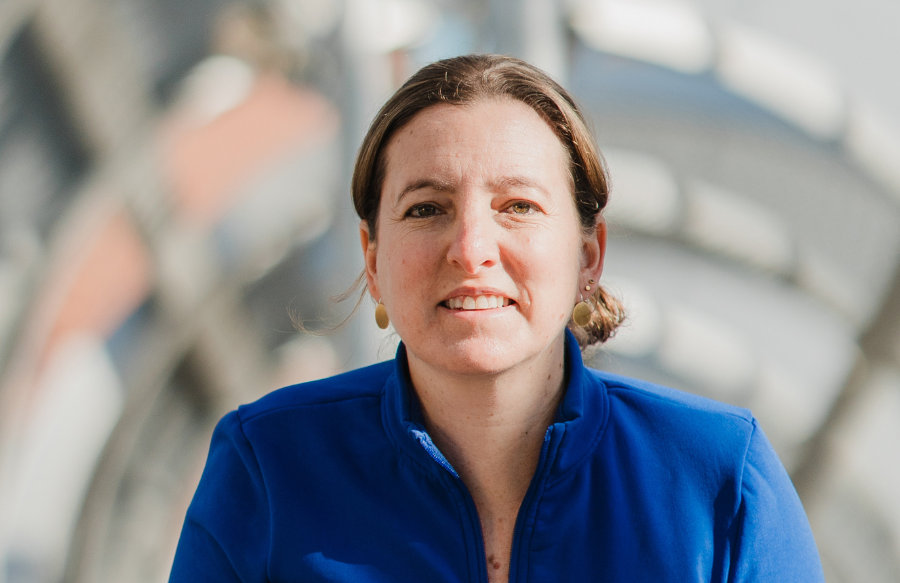
Hi there, I'm Daniela Troconis.
I'm the co-founder of Imagine Yoga Academy and a Kundalini Yoga teacher trainer. For more than 14 years I've guided people toward reconnecting with their own truth through practice, breath, and honest conversation.
Since 2012, Pedro Misle and I have trained more than 900 teachers across Switzerland, Spain, India, and online.
The Imagine Podcast brings the conversations that happen inside our Kundalini Yoga Teacher Trainings out into the world — grounded, practical, and real. Just real practice for real life.
More about meQuestions
Frequently Asked Questions
Episode Transcript
Full transcript · Ep. 40 · The Yoga Mat as Home: Asana and the Art of Coming Back to Yourself
Read transcript
Episode Transcript
Full transcript · Ep. 40 · The Yoga Mat as Home: Asana and the Art of Coming Back to Yourself
Why We Come to the Mat
Have you ever wondered why we keep coming back to the yoga mat? Most of us don't begin practicing yoga because we want to follow an ancient philosophical path. We come because life asks something of us. Sometimes it's stress. Sometimes anxiety. Sometimes physical pain. Sometimes we simply feel disconnected from ourselves and don't quite know why. For me, it was grief. I came to yoga after my father died. I grew up in an atheist family and we didn't speak about spirituality or faith often. And when my father passed away, I found myself searching for something to hold onto. I thought I needed something to believe in. [pause] And what I find most beautiful about this practice is that yoga wouldn't ask me to believe in anyone or anything outside of myself. Instead, little by little, it taught me to trust myself. Not because it took the pain away, but because every time I stepped onto my mat, I discovered I could stay present with what I was feeling instead of trying to escape it. Looking back, I wasn't only looking for something to believe in. I was looking for somewhere to come home to.
Asana: Arrival, Not Movement
Today we're continuing our journey through Patanjali's Eight Limbs of Yoga. Today we arrive at the third limb: Asana. And after more than twenty years of practicing and teaching, I want to share why I believe asana has very little to do with achieving the perfect posture, and everything to do with learning how to return to ourselves. The word asana comes from the Sanskrit root as, meaning to sit or to be established. Traditionally, an asana is a seat. A place where we become settled. For most of us, asana is our very first encounter with yoga, and yet the word itself points not to movement, but to arrival.
Sthira Sukham Asanam
Over the years, my relationship with asana completely changed. At first, I thought I was learning postures. Today I feel the postures have been teaching me about effort, about patience, about when to hold and when to let go. That strength without relaxation eventually becomes rigidity. That relaxation without strength becomes collapse. Somewhere between those two is balance. And perhaps that's exactly what Patanjali was pointing toward in one of the shortest, most profound sutras in the Yoga Sutras: Sthira Sukham Asanam. Asana is a posture that is steady and comfortable. Stable and easeful. For years I understood this as an instruction for the body. Today I hear something much wider. Can I stay steady when life becomes uncertain? Can I remain open when something feels uncomfortable? Can I breathe instead of resist? Those questions have very little to do with flexibility. They have everything to do with life.
An Invitation, Not a Shape to Copy
An asana is not a shape to copy from the teacher. It's an invitation, an invitation to move your energy in a particular direction. When I cue a posture, I'm not asking you to replicate what I look like. I'm inviting you toward an energetic experience. And to get there, you need two things above all: presence and acceptance. Presence to actually feel what's happening in your body right now, today. And acceptance of where you actually are. Because our bodies have been carrying everything. Every experience, every loss, every joy. The body holds all of it, and it deserves to be met with understanding, not with force. We're not here to push through. We're here to grow from understanding.
Home and Laboratory
That's why I often describe the yoga mat as both a home and a laboratory. A home because every time I step onto it, I have a place where I can return to myself. No roles, no expectations, no need to perform. Just presence. And a laboratory because it's honest. How do I respond when a posture becomes challenging? Do I push harder? Do I stop trying? Do I forget to breathe? The patterns that appear on the mat are almost always the ones we live outside of it. The mat lets us see them more clearly. And because we can see them, we can begin practicing something different.
Practicing With Eyes Closed
This is one of the reasons I love the way we practice in Kundalini Yoga. Many of our kriyas are practiced with the eyes closed. At first that can feel unusual. We're so accustomed to looking outside ourselves, checking whether we're doing it correctly. But when we close our eyes, something shifts. Attention naturally moves inward. Closing the eyes isn't about escaping the world. It's about becoming more present to ourselves. And I don't think we can truly be present with life if we haven't first learned to be present with ourselves. Asana prepares us for that.
Coming Home
When I first came to yoga, I thought I was looking for something to believe in. Today I know I was looking for somewhere to come home to. And the mat became that place. Not because life stopped being difficult, but because every time I practice, I'm reminded that I can return. To my breath. To my body. To this moment. In our next episode we'll continue with the Eight Limbs, Pranayama, the practice of breath and life force. Until then, I hope you find a few moments to step onto your mat. Not to become someone else. Simply to come home. With love, from here. Sat Nam.
Imagine Yoga Academy
Something deeper is possible, from exactly where you are.
Nine months. Fifteen people. One way through. The Level I · 200h Kundalini Yoga Teacher Training in Zürich, Geneva, and Lugano begins October 2026.