The Imagine Podcast · Episode 41
Pranayama: The Fourth Step of Patanjali’s Path to Increase Your Energy Levels
Your body came home. Attention is a form of energy, and like any resource, it can be managed, wasted, or spent on exactly what matters.
Listen now
Coming soon to Spotify and Apple Podcasts.
Pedro is asked one question more than any other, in class, after trainings, after workshops: how do I stop my head? He knows the feeling well — physically in the room with the people he loves, while his mind is still stuck in a meeting or an unanswered message. This episode is his answer, built around Pranayama, the fourth limb of Patanjali's path.
Pranayama is usually translated as breath control, and Pedro says that's not wrong, just incomplete. Prana means life force; ayama carries the double meaning of restraint and management. Pranayama, then, is about how a person manages and regulates their energy, which includes the breath but also the far less visible cost of unresolved thinking, worrying, and tension carried without noticing. Patanjali places this limb at the exact hinge of the eightfold path, between the outward and inward practices, between body and the more subtle stages that follow.
Pedro makes the case that before anyone can manage their energy well, they have to know where they want to direct it, which means identifying what's actually relevant in their life. He introduces the idea that truth is free and performance is expensive: every yes that quietly means no, every meeting nodded through while privately disagreeing, drains energy that never gets accounted for. It's a practical lens he returns to often when teaching students in the Kundalini Yoga Teacher Training in Zürich.
He closes with the physiology behind the practice: research on vagal tone shows that slow breathing with a longer exhale than inhale measurably calms the nervous system. He offers a short practice, inhale for four counts, hold for one, exhale for six, three times, as something to use the next time the mind is somewhere else while the body sits in front of someone who deserves better.
3 Key Takeaways From This Episode
- 01 Pranayama is energy management, not just breathing. Prana is life force and ayama means restraint or management — the practice covers thought and attention as much as breath.
- 02 Performance is the most expensive thing you own. Every yes that quietly means no costs real energy, spent twice: once on the performance, once on losing the moment it replaced.
- 03 A longer exhale calms the nervous system. Research on vagal tone confirms what yoga has taught for centuries: inhale four counts, hold one, exhale six, three times.
More from Imagine
Follow along on Instagram for weekly reflections on Kundalini Yoga practice and philosophy.
@imagineyogaacademy.engSubscribe & Review
If this episode resonated with you, taking a moment to subscribe and leave a review makes a real difference. It helps more people find the show.
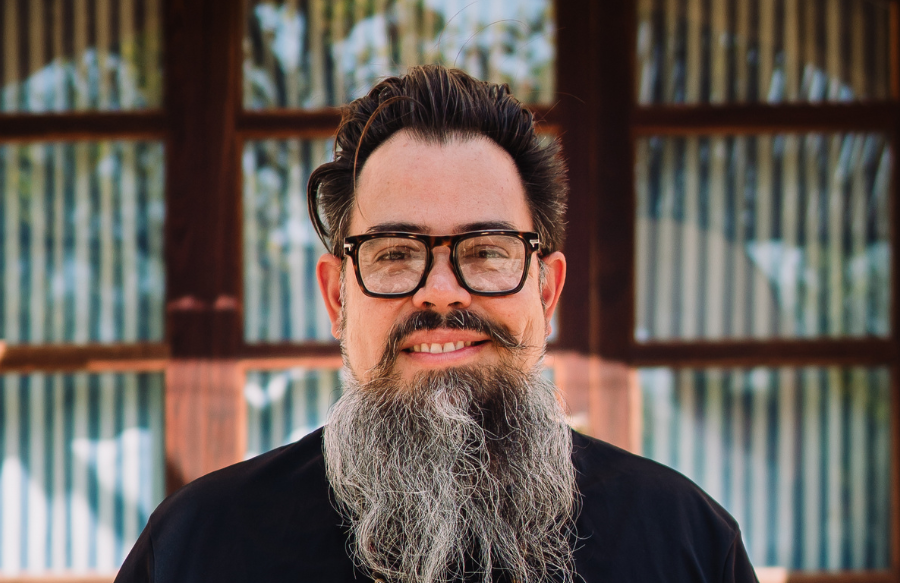
Hi there, I'm Pedro Misle.
I'm the co-founder of Imagine Yoga Academy and a Kundalini Yoga teacher trainer. For the past 14 years, I've helped people reconnect with themselves through practice, philosophy, and honest conversation.
Since 2012, Daniela Troconis and I have trained more than 900 teachers across Switzerland, Spain, India, and online.
The Imagine Podcast opens the kind of conversations we usually have inside our Kundalini Yoga Teacher Trainings — grounded, practical, and real. Just real practice for real life.
More about meQuestions
Frequently Asked Questions
Episode Transcript
Full transcript · Ep. 41 · Pranayama: The Fourth Step of Patanjali's Path to Increase Your Energy Levels
Read transcript
Episode Transcript
Full transcript · Ep. 41 · Pranayama: The Fourth Step of Patanjali's Path to Increase Your Energy Levels
Physically There, Somewhere Else
There is a question people ask me very often in class, after a training, after a workshop. They phrase it differently every time, but at the end, it is always the same question. Pedro, how do I stop my head? And believe me, I understand it, because I ask myself that same question a million times. Picture this: you get home from work, your kids run up to tell you something that happened at school, your partner starts talking about their day, and you're there, nodding, physically in the room, while your head is still in a meeting or stuck on a message you didn't answer. That's being there but not being there. And you love these people, and somehow you still can't give them the one thing they actually came for, which is you. This is what energy management, or the lack of it, looks like. Nobody taught us that our attention is a type of energy. And as a resource, we can manage it, and we must be very aware of how we spend it.
Why We're So Exhausted
I have been teaching Kundalini Yoga and Kundalini Yoga teacher trainings for years. And one thing that comes up every year, regardless of the country, regardless of age or gender, is this: people are exhausted. Do we have less life force than previous generations? The answer is no. What's different is that our life force is being pulled in a million directions. And it is our responsibility, if we want to come back to ourselves, to learn how to manage and own that energy.
Prana and Ayama, Defined
I'm going to be talking about the fourth limb of Patanjali's path, Pranayama. It's usually translated, and it's not wrong, as breath control. But that's not the complete story. Prana is life force, the energy running through you right now. And ayama carries two meanings in Sanskrit: restraint, but also management. So Pranayama is really about how you manage and regulate your life force. That includes your breath, but it also includes how you spend your energy on thinking, worrying, and the tension we carry without even noticing anymore. Patanjali places this limb right in the middle of the path of yoga, and that is not an accident. Before it come the Yamas and the Niyamas, and Asana. After it come Pratyahara, Dharana, Dhyana, and Samadhi, the more subtle steps of the way. Pranayama sits at the hinge, the bridge between body and mind. Without learning how to manage your energy first, there is no way to hold attention steady.
Trusting Something Bigger
Before we are able to manage our energy, we need to know where we want to take that energy, meaning we have to find out what is relevant in our lives and what is not. Once I learn this difference and begin dedicating the correct amount of energy to the things that matter most, my life changes completely. [pause] Think about air for a second, not oxygen, air as an idea. It's available to everyone, no exceptions. You can survive weeks without food, days without water, but you would only live minutes without air. Life handed you, without asking anything in return, exactly what you need to stay here, second by second. For me, that's evidence you can already trust something bigger than you cares about you. This is why in Imagine we share that Pranayama is about trusting life.
The Cost of Performance
Every thought you keep repeating without resolving anything comes with a cost. This is not a metaphor, it's a real cost. When you're sitting with your family and your mind is still at the office, you're paying the price two times: the energy of managing it, and the loss of actually being with your family. Left without direction, the mind always finds something to grab onto. Pranayama is the tool we use to own the direction of our minds. It is training yourself to catch the moment your energy starts drifting and bringing it back to the here and now. [pause] The teachers left us this idea that nothing is for free except the truth. What actually drains us is the performance. Saying yes when you mean no. That's expensive, and it's very expensive energy-wise. Most of us spend that kind of energy daily without ever noticing where it went. Spend less on the layers and the performance, and spend more in being plainly whoever you actually are underneath them.
The Rhythm of Breath
Every breath has two movements we must pay attention to. You inhale, taking in whatever life is offering you right now. You exhale, and you're giving something back, actually giving back the precise thing plants need to create new oxygen. And between the two, there is always a pause. Some people only know how to receive, they accumulate, hold on, never releasing anything. Others give until there's nothing left for them, and never allow themselves to receive. Neither holds up for very long. Your breath has been showing you the right rhythm every single time. You give, you receive, you pause. That is the rhythm of life.
The Science and a Practice
Slow controlled breathing, especially when your exhale runs longer than your inhale, measurably increases vagal tone, the activity of the vagus nerve, the one responsible for calming your whole nervous system down. It shows up again and again in studies tracking heart rate variability. When a yoga teacher tells you that changing your breath changes your state of mind, that's not poetry. That's biology. [pause] If you're tired right now, if your mind won't stop, try this. Inhale for a count of four, feeling like you're actually receiving what's in front of you. Hold for one. Exhale for a count of six, longer than the inhale on purpose. Do it three times, and then open your eyes and feel the difference. It won't fix your week of work, but it will bring you back to the present. Pranayama is asking you to decide where you actually live right now, which is to ask in what do you want to invest your life. The answer should be clear. Invest it in what is relevant to you. And the rest, just exhale it and let it go. Thank you very much for being there. I am Pedro Misle from Imagine Yoga Academy. This has been the Imagine Podcast. Please remember to subscribe and to share the episode, and I wish you the best. Sat Nam.
Imagine Yoga Academy
Something deeper is possible, from exactly where you are.
Nine months. Fifteen people. One way through. The Level I · 200h Kundalini Yoga Teacher Training in Zürich, Geneva, and Lugano begins October 2026.